
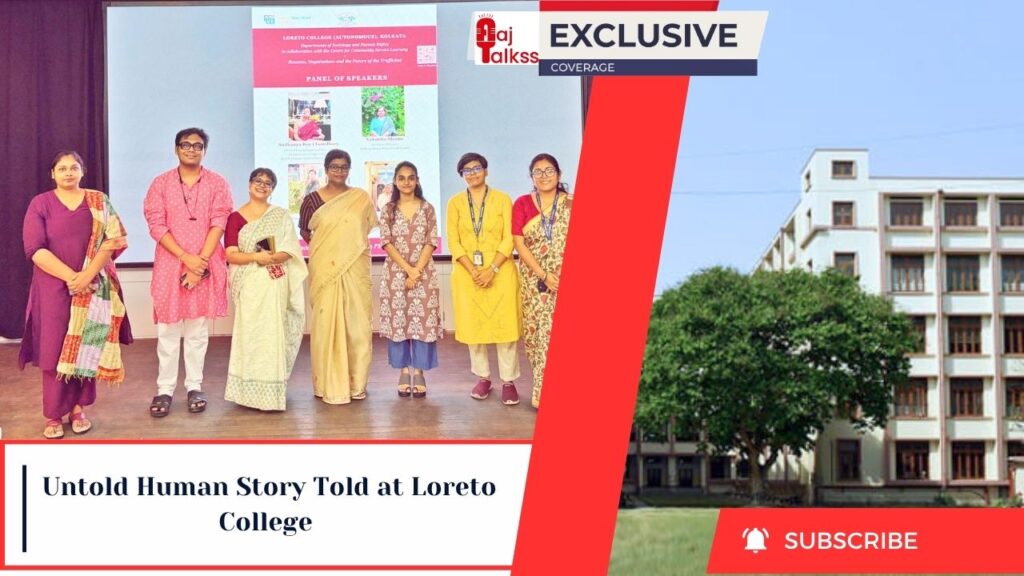

ATNN, Kolkata: Conversations around human trafficking took centre stage at Loreto College (Autonomous) Kolkata, on July 30, as the Department of Human Rights and Sociology, in collaboration with the Community Service Centre and Kolkata Mary Ward Social Centre, hosted an awareness programme to mark the World Day Against Trafficking in Persons. Bringing together voices from journalism, social work and psychology, the event encouraged students to look beyond headlines and understand the human stories behind one of the world’s gravest human rights concerns.
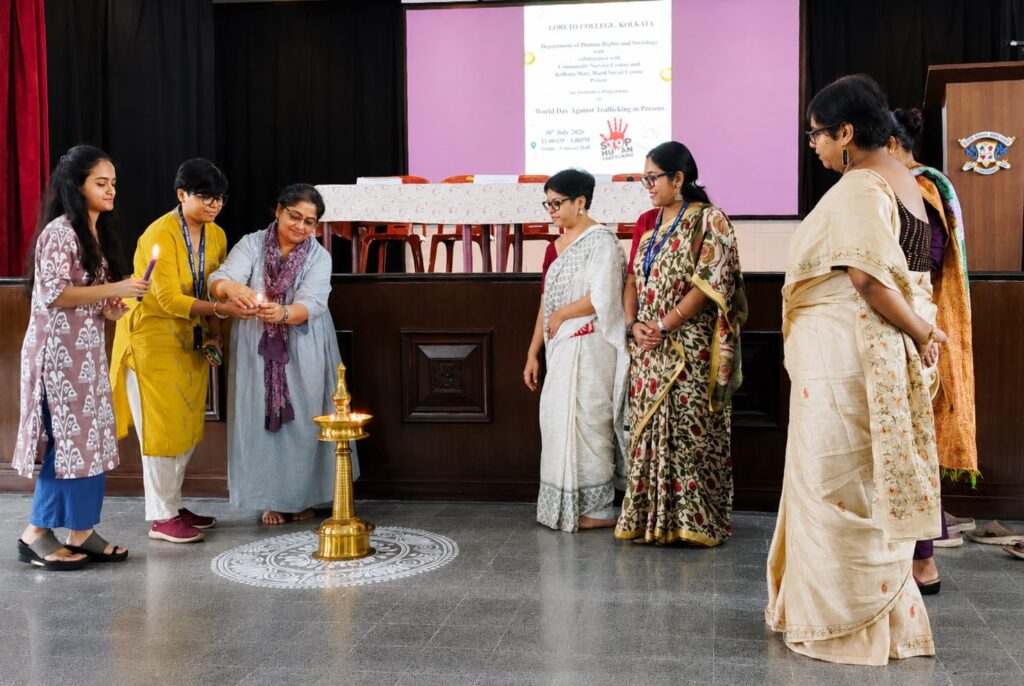
Held at the College Concert Hall, the programme was organised under the guidance of Teacher-in-Charge Dr. Sr. A. Nirmala and coordinated by Chaitali Karmakar, Head of the Department of Human Rights; Karobi Das, Community Service Leader; Meghjit Sengupta, Head of the Department of Sociology; and Ms. Kaushiki Banerjee, Faculty, Department of Sociology. The proceedings opened with the ceremonial lighting of the lamp by Dr. Amrita Dasgupta, IQAC Coordinator, setting the tone for an afternoon of dialogue, reflection and learning.
Freelance journalist Anwesha Banerjee drew from her reporting experiences on trafficking and rescue operations to underline an often-overlooked reality: while women and girls are widely recognised as trafficking victims, boys too remain vulnerable. She urged students to view trafficking not through the lens of gender alone, but as a pressing human rights issue affecting entire communities.
Offering a grassroots perspective, Nabanita Shome, Associate Director of Kolkata Mary Ward Social Centre, shared the organisation’s work in rescue, rehabilitation and community intervention. One of the highlights of her presentation was the innovative Peer-to-Peer Monitoring System, where children, adolescents and young people from vulnerable communities become advocates for child protection within their own neighbourhoods. The initiative has earned wide recognition, with several peer leaders receiving the Bravery Award from the West Bengal Commission for Protection of Child Rights, the Award for Courage from the Telegraph Foundation, and the programme itself winning the Third ABC Solidarity Prize from Spain.
Adding another important dimension to the discussion, clinical psychologist Sudhanya Roy Chowdhury, faculty member of the Department of Psychology at Loreto College, spoke about the invisible scars left by trafficking. From trauma and anxiety to the challenges posed by stigma and family rejection, she highlighted the importance of sustained counselling, psychotherapy and community support in helping survivors reclaim their lives.
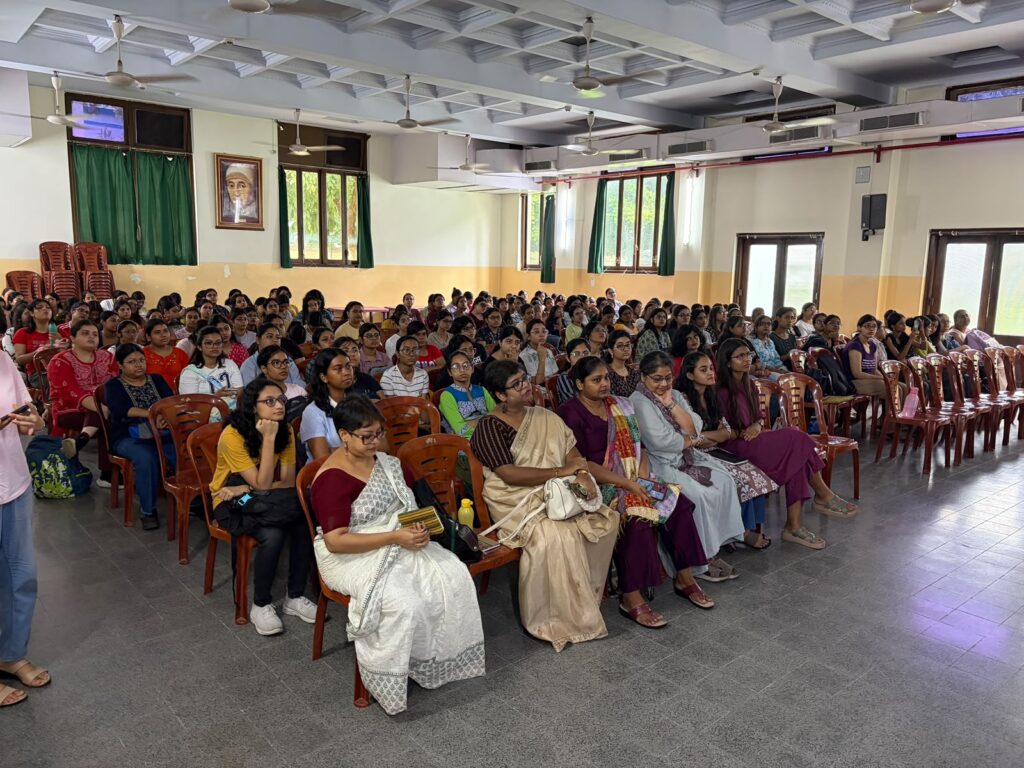
The interactive session saw enthusiastic participation from nearly 160 students, who engaged the speakers in conversations on trafficking, ethical journalism, rehabilitation and mental health. The exchange reflected a growing interest among young people in understanding complex social issues beyond the classroom.
The day’s events also included an essay competition on the theme of human trafficking, drawing 45 participants from across departments. The entries were evaluated by Dr. Sanghita Sanyal, Head of the Department of English, who selected the winning essays based on originality, critical insight and relevance.
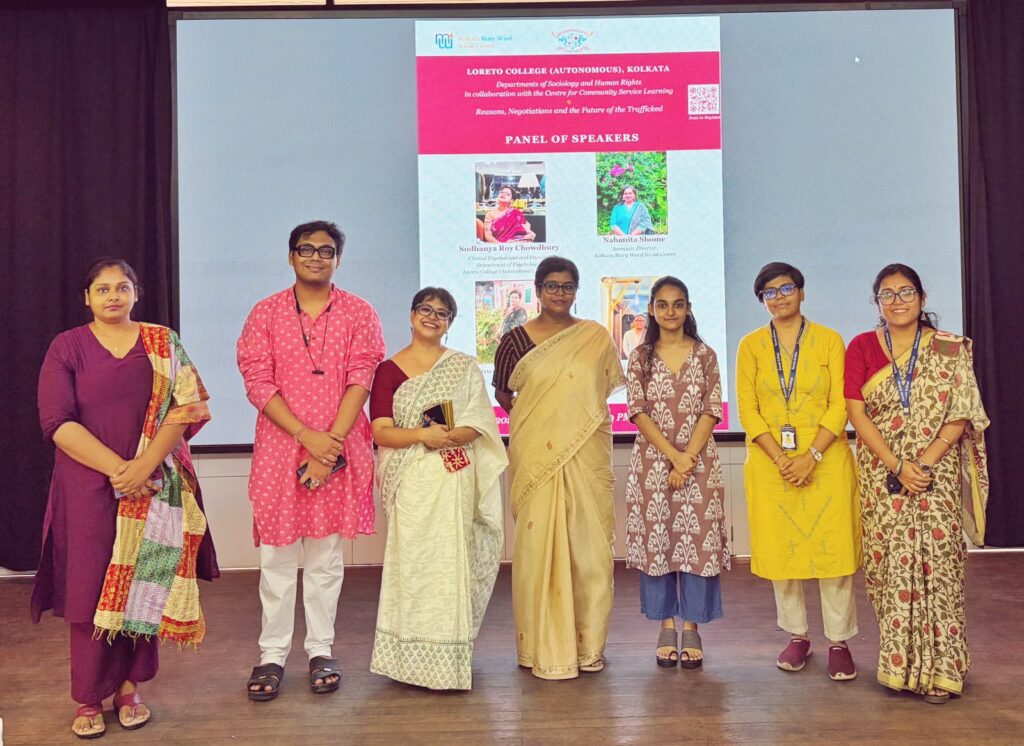
More than just a commemorative event, the programme served as a reminder that tackling human trafficking demands collective action. By creating a space where students could interact with professionals from diverse fields, Loreto College reinforced the message that awareness, empathy and informed participation are among the strongest tools in the fight against exploitation.

Thanks AajTalks for publishing the news