
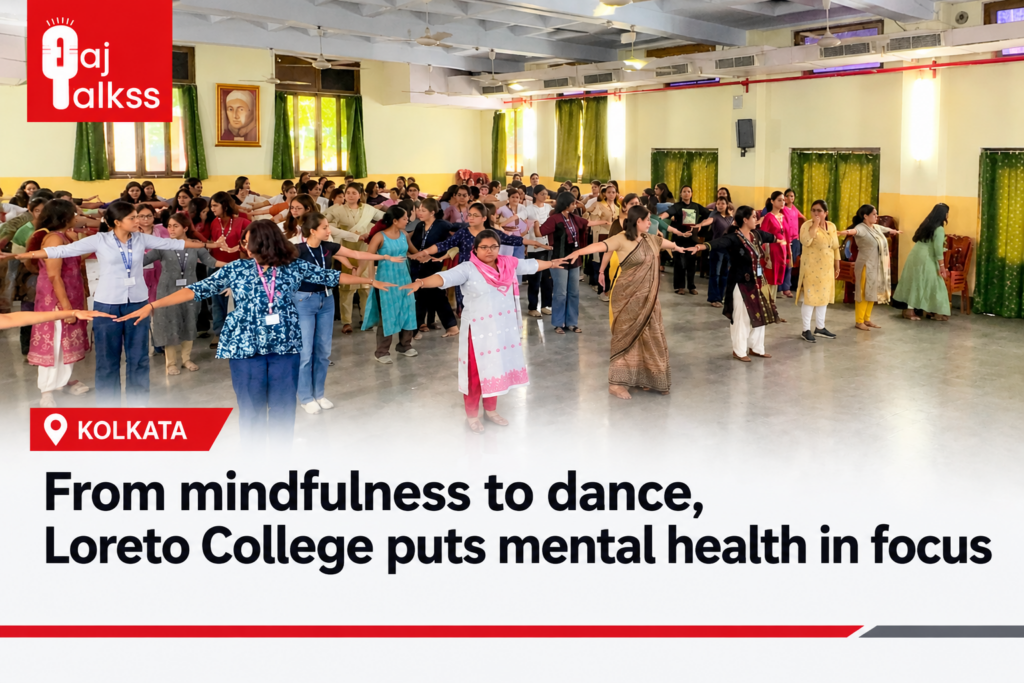

Aaj Talkss, Kolkata: Stress, difficult emotions and the pressure of everyday life took centre stage at Loreto College (Autonomous), Kolkata, as the Department of Psychology marked World Mental Health Day on October 8 with a programme that went beyond the usual talk-and-listen format.
The idea was simple — understand your mind, get comfortable with your emotions and perhaps learn a thing or two about dealing with stress.

Ms Neerajana Ghosh kicked things off with a session on mindfulness, getting students to slow down, observe their surroundings and acknowledge their thoughts without judging themselves. A guided exercise helped participants understand how to let thoughts come and go instead of getting caught up in them. The session also cleared up the difference between mindfulness and meditation, while introducing everyday techniques to deal with stress and difficult emotions.

Next up was Dr Aditi Bandyopadhyay, a physician and dance movement therapist, who showed students that sometimes, you don’t need words to express what you feel. Through interactive movement-based exercises, she explored how Dance Movement Therapy (DMT) can help people connect with their bodies, express emotions and find relief from stress.

The discussion also touched on the use of DMT in supporting people with special needs and those living with conditions such as dementia, Alzheimer’s disease and Parkinson’s disease. The takeaway? Movement can be more than just physical activity — it can also offer a different way to understand and express emotions.

The day had another highlight, with the inauguration of Qualia-Verse, the Psychology Department’s annual e-magazine, by the college’s Teacher-in-Charge, Sr Dr A. Nirmala. Built around the theme of “lived experiences”, the publication gives students a space to share personal stories, perspectives and experiences that might otherwise remain unheard.

And the college’s mental health initiatives aren’t limited to campus activities. Swosti, its mental health clinic, offers free assessments by trained mental health professionals to members of the community, taking psychological support beyond the classroom.

With mindfulness, movement therapy and student voices all finding space in the programme, Loreto College’s message was clear: mental health conversations need not be complicated or confined to a counselling room. Sometimes, they begin by simply paying attention to how we feel.